Monday, May 17, 2010

Gardens


Grow: A Novel in Verse
by Juanita Havill and illustrated by Stanislawa Kodman

Kate’s Aunt Berneetha wants to start a community garden on an empty lot, and Kate is very excited to be helping her aunt out. They start out by clearing the lot, and then get to work making the rows to plant in. One young man soon joins them in the garden, and then a local doctor donates some tomato plants. Little by little more and more people start working in the garden. Then the city council decides to have a meeting to discuss rezoning the area, and that will end up causing a parking garage to be built where their garden is. Aunt Berneetha decides to fight this decision to sell the land and make it a parking garage, and she needs the help of others in the neighborhood to change the minds of the people who want the parking lot. Will they be able to stop the garden from being destroyed? Can they change the councilors’ and the old owner son’s mind about building the parking garage?


Mrs. Spitzer’s Garden
by Edith Pattou and illustrated by Tricia Tusa

Mrs. Spitzer is a teacher, and every year, the principal gives her a packet of seeds to help grow. Mrs. Spitzer plans her schedule and makes sure she has the tools she needs to help those seeds grow. Mrs. Spitzer takes very good care of her garden by planting the seeds in a good place, watering them, helping them get plenty of sun, and protecting them from weeds and pests. Different plants need different things, and Mrs. Spitzer works hard to make sure that every plant gets the attention that it needs. She continues to care for her garden as the seasons change. Then comes the time that her job is over, but those plants will continue to grow on and on. Next year, Mrs. Spitzer will be ready for some new seeds to grow into plants. What do you think are like those plants? What do teachers usually help make grow?


Rose’s Garden
by Peter H. Reynolds

Rose has traveled all over the world in her teapot, and she has collected seeds from all over so she can remember where she got them. When her teapot became full of seeds, Rose decides to plant a garden. When she comes to a big city by the ocean, she decides to take a look around before planting her garden. While exploring, she found a place in the city that was empty, and she thought that it needed some color. Rose got the soil ready for planting her seeds, but when she got back to her teapot, she found that the birds had eaten most of the seeds. She took the few that were left and planted them, but nothing seemed to come of it. Will Rose’s Garden grow from those seeds she planted? Can she make that empty lot beautiful like she wanted to?


Garden Crafts for Kids: 50 Great Reasons to Get Your Hands Dirty
by Diane Rhoades

This nonfiction book is about starting a garden and taking care of it. There are chapters on how to begin growing a garden, how to design a garden, how to care for it, some easy to grow vegetables and flowers, and seven projects that you can use your garden for. There is also a chapter on how to take of your garden during the months when there are no plants. The projects include creating a bean tepee, making toilet-paper seed tape, creating garden markers, making topiary, making a seed caddy, and some cupcake recipes that you can cook using vegetables, fruits, and flowers from your garden. There is even a recipe to create your own homemade bug spray!

Monday, May 10, 2010

Mother Goose


Wee Sing Mother Goose
by Pamela Conn Beall and Susan Hagen Nipp

This is both the book and CD of Mother Goose rhymes that you can sing along with. There are 71 rhymes and each rhyme has the words and the musical notes, and there are also additional verses to the songs that you may or may not be familiar with. Each rhyme also has a little picture of an animal acting out the rhyme. The CD is one hour long.


Mother Goose Unplucked: Crazy Comics, Zany Activities, Nutty Facts, & Other Twisted Takes on Childhood Favorites
by Helaine Becker and illustrated by Claudia Davila

Within this book are fairy tales and rhymes that are retold in some very interesting ways, and there are some activities that are tale and rhyme themed that you can attempt with your friends, such as “Kiss the Frog” where you are blindfolded and have to kiss the frog (where you kiss the frog determines how many points you receive). There are also some recipes, riddles, comics, jokes and plenty of different kinds of games and activities to try. At the very end of the book, there is a “What’s Your Fairy Tale Personality?” Quiz where you can answer the questions to find out what fairy tale character you would be.


The Neat Line: Scribbling Through Mother Goose
by Pamela Duncan Edwards and illustrated by Diana Cain Bluthenthal

There once was a baby scribble that great into a “neat line.” Then one day the neat line decided to go into a real book and chose Mother Goose Nursery Rhymes. The line talks to the characters of the rhymes, but the rhyme is also there. When Little Boy Blue loses the sheep, the line turns into a trumpet that helps bring them back. Then the line becomes a path that leads to the well for Jack and Jill so that they don’t go rolling back down the hill. The line also helps in Mary’s garden and Little Miss Muffet with her spider problem. Then the line becomes the Man in the Moon and calls it a night.


Mary Engelbreit’s Mother Goose: One Hundred Best-Loved Verses

Mary Engelbreit has chosen one hundred of her favorite Mother Goose rhymes and illustrated them. She starts with the Mother Goose rhyme, and the illustrations that she drew to go with the rhymes are very detailed, colorful, and beautiful
.

Monday, May 3, 2010

May is National Photo Month

May is National Photo Month


The Kid’s Guide to Digital Photography: How to Shoot, Save, Play With, & Print Your Digital Photos
by Jenni Bidner

This is a nonfiction book that focuses on digital photography, and has information on camera basics, how to take pictures, some software that can be used to work with digital photographs, printing the photographs, and ideas for projects or presents. There is a chapter that discusses different types of digital cameras in order to decide which will work best. There is also a chapter on figuring out how to take the best photographs that you can with suggestions on angles and backgrounds. At the end of the book is a glossary.


Photography
by Alan Buckingham

This nonfiction book covers all aspects of photography from the camera obscura created during the Renaissance to the digital camera and camera phones of today. There are many pictures of the cameras themselves and photographs that were taken with the camera being discussed. The book also discusses different parts of photography, such as studios, color, movement, film, and developing film. There are also some pages about extreme photography, photography taken of space, and underwater photography. At the end of the book, there is a timeline and a list of museums of photography.


Photographer Mole
by Dennis Haseley and illustrated by Juli Kangas

Mole was a photographer that enjoyed taking portraits. He always took photographs of important events. He was often invited to dinner where he would tell stories about the pictures he had taken. All the pictures he had taken hung in the homes of those he had photographed, but Mole felt that something was missing. He did not know what it was, but it was making him unhappy. Then one day, Mole decided that he needed to go away and find what was missing in his pictures. While Mole is gone, he is missed at dinners. He continues to send them photographs, but he did not seem to find what he was missing. Will Mole be able to find what is missing in his photographs? Will he make it back home again?


Smile!
by Geraldine McCaughrean

A photographer is involved in a plane crash, but he survives with only a Polaroid camera. Flash is found by a group of people that have never been to a city, and they have no idea what camera or photographs are. After taking a picture of a couple of children, the people are in awe of the little box that can capture moments in time. There are many things of which the people want photographs taken, such as their new cow and warriors. However, Flash only has nine pictures left, and he lets them decide what the photographs should be. Flash is happy that he could introduce photography to this group of people. He also starts trying to lend a hand in the work, but he finds it hard to locate a place in the group where he could be useful. After a feast is given to celebrate the food that they have gathered, Flash is happy to be able to capture these moments that the people will be able to enjoy latter, even if future harvests do not go as well. How will Flash use the rest of the photographs that he has left? Will he be able to get back home?

Monday, April 26, 2010

April 30th is National Honesty Day

April 30th is National Honesty Day


Arthur’s Classroom Fib
by Marc Brown

On the first day of school, Mr. Ratburn gives everyone the homework of writing a report about their summer vacations. Arthur’s friends all did exciting things like Buster a Muffy taking trips on ships and airplanes, Francine’s summer at tennis camp, and Binky’s trip to Disney World. Arthur knows that his summer was very boring compared to everyone else’s. That night, he decides to exaggerate a story where he rescues his sister D.W. from drowning, an octopus, and a shark. After reading the story aloud, D.W. tells him that it is a fib, and that he would get into trouble if he used it as his report. Will Arthur share the exaggerated story with everyone, or will he tell the real truth about his summer?


Princess K.I.M. and the Lie that Grew
by Maryann Cocca-Leffler

Kim was starting her first day of school in a new town, and she was afraid that the other children would not like her. Her father tells her that they will if she will just be herself. Whenever the teacher introduces Kim to the other students, one girl replies that her name is also Kim. Kim wanted everyone to like her so she told a little lie. She said that her name was K.I.M. for Katherine Isabella Marguerite. She also told the teacher that she was from a royal family, and the teacher bowed to her. The other children gathered around her later, and she decided to lie a little bit more. She told them that she was a princess, and that her grandmother is a queen. The children see her walking to school with her father who is wearing a suit, and as he hands Kim her lunch, he calls her princess. The children then really do believe that Kim is a princess. The other children then start doing little things for Kim, such as opening the door, carrying things, and giving Kim their lunches. Soon Kim is asked by the other students for autographs and pictures, and her lie keeps getting bigger and bigger. Then she tells everyone that her grandmother is coming to town. The other children really want to meet the queen. Will the other children find out about her lies? Will they still want to be her friends after they find out the truth?


Neil Armstrong is My Uncle & Other Lies Muscle Man McGinty Told Me
by Nan Marino

Tamara Ann Simpson seems to be the only person on Ramble Street that knows that ten-year-old “Muscle Man” McGinty is a liar. McGinty is a new kid on the street, and he likes to exaggerate (which can be seen by some as lying). No one but Tamara seems to worry that Muscle Man tells these tall tales, and she wonders why that is. Muscle Man McGinty is a foster child, and to Tamara, he took away everything that had to do with her friend Kebsie when she moved away. That is why she is determined to prove him the liar that she knows he is. Then one day, Muscle Man states that he can beat everyone in the neighborhood at kickball (their favorite game), and Tammy knows that Muscle Man will finally be proven as a liar. No one in her neighborhood can back down from a challenge like that. Due to many obstacles, the game ends up lasting for several days, and to Tammy’s annoyance, the other kids on the street take it easy on Muscle Man. Will Muscle Man lose his bet? Will Tammy prove to everyone what she believes about Muscle Man, or will she find out the real reasons for his lying? Will she want to be his friend?


The Honest-to-Goodness Truth
by Patricia McKissack and illustrated by Giselle Potter

One day, Libby’s mother asked her if she had fed and watered O’l Boss. When she lies to her mother, her mother tells her to “Speak the truth and shame the devil,” and then punishes her for lying by not getting to play with her friend and having to stay on the porch. Libby decides from that day on to never lie again. At church, Libby tells her friend Ruthie Mae that she likes her dress, but that she has a hole in her sock, and as she runs by, Libby does not see the hurt on her friends face. After church, Libby asks Ruthie Mae to walk home, but Ruthie Mae tells Libby that what she said was mean, even if it was the truth. The next day at school, Libby tells the teacher that Willie did not do his homework, which gets him into trouble. She continues to tell the truth all day, but by the end of the day, no one wants to talk to her. She is very sad and tells her mother what happened. Will Libby’s mother be able to teach Libby about when it is appropriate to tell the honest-to-goodness truth? Will Libby be able to stop her friends from being mad at her?

Monday, April 19, 2010

Some New Books for April


Aliens & UFOs
by Chris Evans

This nonfiction book discusses aliens and how strange things that have happened on Earth are thought, by some people, to be the work of alien visitors. There are also facts are how the name “flying saucer” became used when talking about UFOs, and how many reported sightings of UFOs there are every year. The book also discusses aliens and what they may look like, and the popular aliens from movies and television, such as Alien and Dr. Who. There are also discussions of alien hunters, kidnappings by aliens, ideas of why the aliens may come here, and finally, if the aliens might just be living among us right now. The pictures are very cool, and there is even a pop-up spaceship. There is even a test at the very end of the book to see how much was learned.


First Rain
by Charlotte Herman and illustrated by Kathryn Mitter

Abby and her parents are at the airport and are ready to fly to their new home in Israel. Abby and her grandmother will miss each other very much, but her grandmother gives her a “plane letter” to read as she is flying. Abby reads her letter, and when she gets home, her grandmother notices the letter that Abby wrote for her. They talk to each other over the phone and by email. Abby tells her grandmother all about visiting Jerusalem, and going on a hike (or tiyul) and to the marketplace (or shuk) and sends pictures, too. Abby also sends her grandmother some mud from the Dead Sea that is supposed to be good for your skin. Her grandmother sends Abby a picture of herself wearing the mud on her face. Her grandmother also sends her some leaves that have changed color, and Abby cannot wait for the first rain of the season. Will the first rain ever come? How will Abby share it with her grandmother?


Big Nate: In a Class by Himself
by Lincoln Peirce

This book is a mixture of illustrations and words that discusses a day in the life of Nate Wright. The illustrations are much like comic strips. Nate believes that he is “destined for greatness.” His day, however, does not seem to be going that way. He thinks he forgot about a history test, but then he finds out there is not a test and gets a favorable fortune in a fortune cookie. Unfortunately, it seems that the fortune cookie is wrong. Three classes down, and Nate has three detentions. Then the day only seems to get worse. Will Nate be able to follow the fortune and “surpass all others?” Will his day get any better?


Fly Free!
by Roseanne Thong and illustrated by Eujin Kim Neilan

Mai stops to see the sparrows that are for sale next to the temple gate. The vendor lets her feed the birds, but Mai would really like to buy them and set them free. That is why the vendor is selling the birds, so that customers can buy them and set them free as a good deed. Mai, however, cannot afford to set any of the birds free, so she hopes that someone will. Then a girl named Thu comes to the temple and removes her sandals. Mai has never seen such beautiful shoes. On her way out, Mai asks Thu if she would like to help her feed the sparrows. Then she sings a little song about good deeds coming back to those that do them. On her walk home, Thu sees a girl whose foot has been cut on glass, and she gives the girl her sandals. As she leaves, Thu sings the song, and the girl hears it. As she is bringing home water from the well the next morning, the girl notices the oxcart driver is asleep, and so she leaves some water for him when he wakes up. He hears her sing the song as he drinks the cool water. That day, the oxcart driver sees an old woman with a big basket of cakes, and he offers to give her a ride for one of her cakes. As he leaves, she hears him singing the song. Will the old woman continue the chain of good deeds? Will the good deeds of the others help Mai and her sparrows?

Monday, April 12, 2010

National Library Week

April 11-17, 2010 is National Library Week


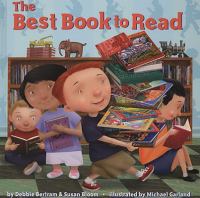
The Best Book to Read
by Debbie Bertram & Susan Bloom and illustrated by Michael Garland

Today is the class trip to the library, and the librarian tells the children that she will help them find the book that is “best” for them to read. She shows the children a space book, a book with knights and dragons, a bug book, a book about how to bake a cake, a dinosaur book, a book on how to train pets, and a magic trick book. Then the children pick out the “best book” and get their own library card. Then on the bus ride back to school, everyone enjoys reading the books they checked out.


Bats at the Library
by Brian Lies

One night the bats see that a librarian has left one of the library windows open a crack. The bats love to visit the library, and they cannot wait until they have the opportunity to do so. The bats look at many different kinds of book, and some bats like to “hang” around and talk about the books they have read. The little bats also learn the kinds of games they can play at the library, including making shadow shapes and copying themselves on the copier. The bats even have a storytime while they rest. Then the bats imagine themselves inside the story. They are so wrapped up in the story, the bats do not notice when the sun begins to lighten the sky. When they do notice, they know that it is time to leave, but they hope that a librarian will be kind enough to leave the window cracked on a night that is soon.


The Boys who was Raised by Librarians
by Carla Morris and illustrated by Brad Sneed

Melvin spends a lot of time at the Livingston Public Library, where he can learn about anything that he is curious about. He also gets to see his favorite people behind the reference desk. The librarians always talked to Melvin, and they were interested in anything that he was. They would help him find whatever information he needed in a book or on the Internet. One day, Melvin accidentally lets eighty-seven insects loose in the library, but Marge, Betty, and Leeola help him find, identify, classify, and catalog all of the bugs very quickly. As the years go by, the librarians help Melvin prepare for his part in the school play, help him with his baseball card collection, help him with the spelling bee (which he wins), and with a science fair. Melvin also comes to all the library programs. In high school, Melvin even gets a part-time job at the library. While he is at college, Melvin stays in touch with his favorite people at the library, and then he becomes the new librarian after he is done with school. He will soon help other children the way his favorite people helped him.


Library Lil
by Suzanne Williams and illustrated by Steven Kellogg

Lil has always had a book in her hand, even when she was just one year old. She even carried a book on the field with her when she played soccer. Lil had read all of the books in the children’s section by the time she was eight years old. She was also very strong, and could lift a whole set of encyclopedias in one arm, while reading one with her right. She would turn the pages with her teeth (but please do not try this at home). When she grew up, Lil became a librarian. Unfortunately, everyone in that town liked to watch television. Then one night a powerful storm blew in and knocked out the electricity. Lil pushed the bookmobile all over town and made sure everyone had something to read by candlelight. The electricity stayed off for two weeks, and by that time, everyone had gotten used to reading instead of watching television. Lil storytimes were also very popular. Then one night a motorcycle gang came to town. The leader was Bust-‘em-up Bill, and he got very upset when he found out he could not watch his favorite show. He decides to block the parking spot for the bookmobile with his motorcycle gang’s motorcycles. When Lil shows up, she tells them they need to move the motorcycles, or she will. Bill tells her they will all read if she can move the motorcycles. Lil throws them all into a big pile and parks the bookmobile. Then the guys go into the library and start reading. Soon they have to expand the library, and Lil gets some help from Bill, who is now called “Bookworm Bill.” He is also a great storyteller, and there are never any overdue books since he started working there.

Monday, April 5, 2010

April is National Humor Month

April is National Humor Month
Check out some of these joke books and keep your friends and family laughing


The Big Golden Book of Laughs: A Treasury of Poems, Jokes, Riddles and Rhymes
selected by Linda Williams Aber and illustrated by Jerry Smath


You Must Be Joking!: Lots of Cool Jokes
compiled and illustrated by Paul Brewer


The Silliest Joke Book Ever
by Victoria Hartman and pictures by R.W. Alley


1,000 Jokes for Kids of All Ages
by Michael Kilgariff


Keep 'em Laughing: Jokes to Amuse and Annoy Your Friends
by Louis Phillips and illustrated by Michael Chesworth


Silly Knock-Knocks
by Joseph Rosenbloom and illustrated by Steve Harpster


Ha! Ha! Ha!: 1,000+ Jokes, Riddles, Fact, and More
by Lyn Thomas and illustrated by Dianne Eastman


Jokelopedia: The Biggest, Best, Silliest, Dumbest, Joke Book Ever!
by Ilana Weitzman, Eva Blank, Roseanne Green and illustrated by Mike Wright

Monday, March 29, 2010

Some New Books for March


Open Me Up
by Laura Buller, Julie Ferris, Niki Foreman, Fran Jones, Susan Kennedy, Ashwin Khurana, and Richard Walker

This nonfiction book is all about the body. The book is divided into eight sections: Being Human, Outside In, Moving Framework, In Control, Fueling Your Body, Maintenance and Transportation, Malfunctions and Medicine, and Life Story. These sections cover all of the body systems, parts, and other interesting facts about how the body works. There is also discussion of how people in the past looked at the human body, and how the body has affected life. There are also discussions about DNA and reproduction. Throughout the book are colorful pictures and illustrations to help understand different parts of the body and how they affect a person’s life.


I Can Help
by David Hyde Costello

One day a little duck gets lost in the tall grass, but a monkey says that he can help. While helping the duck, a limb breaks and the monkey starts to fall, but the giraffe is there to help. Then the giraffe has trouble reaching the leaves in a very tall tree, but gorilla is there to help pull the tree down to where the giraffe can reach. Each nice thing, which an animal does for another, leads to that animal also needing help. Will there be another person there to help everyone who tries to help someone else?


The Intrepid Canadian Expedition
by Sara Pennypacker and pictures by Macky Pamintuan

Flat Stanley is back for another adventure. Stanley’s flat shape makes skiing hard for him, but there are lots of advantages that come from being flat, too. However, Stanley’s shape has started to make him feel lonely, because there were no other kids like him. Then Stanley’s brother, Arthur, hurts his ankle on the ski slope, and Arthur tells Stanley to take Nick, the boy who helped him with his ankle, with him to the World Snowboarding Championships in Arthur’s place. Stanley believes he might make a new friend. Nick tells Stanley that he is really good at snowboarding once they get to the competition and Stanley volunteers to be his snowboard. They make quite a team. Then Stanley and Nick launch themselves into the air, but they are unable to come down. They keep gliding along with the wind. When they finally land, they are met by an Inuit man who takes them to his home to get warm. They learn from an Inuit shaman that they must make a journey to Niagara Falls to find their families. Will they be able to make it that far? Has Flat Stanley found a new friend?


Wendel’s Workshop
by Chris Riddell

Wendel is an inventor, and he is so busy inventing that he does not have time to tidy up his workshop. Then one day he builds a robot to help him out, and he names the robot, Clunk. Unfortunately, Clunk was very, very bad at tidying up. He could not seem to get anything right. He put tea cups in the sock drawer and poured Wendel’s tea into a boot. So Wendel throws Clunk out onto the scrap heap. Wendel spends that whole night creating a new robot, the Wendelbot. The Wendelbot worked better than Clunk, but he took tidying up too seriously. Suddenly, Wendelbot decides that Wendel is not tidy enough, and the Wendelbot throws Wendel out onto the scrap heap. Once Wendel is on the scrap heap, he finds Clunk. They work together to make more robots in order to stop Wendelbot. Will they be successful at stopping Wendelbot? Will Wendel treat Clunk like he did before?

Monday, March 22, 2010

Spring

Spring Begins on March 20, 2010


Wake Up, It’s Spring!
by Lisa Campbell Ernst

It was a long winter, but one day, the sun rises and tells the earth to “Wake Up, It’s Spring” as it warms the earth up. Then the earth tells an earthworm to wake up. The earthworm tells the seed to wake up, and the seed sprouts out of the earth. Then the seed tells the ladybug to wake up. The ladybug flies over to rabbit and wakes rabbit up by ticking its ear. Rabbit then jumps up and tells bird to wake up. The animals continue to tell each other to wake up, and then the dog tells the baby to wake up. The baby tells her family, and then everyone enjoys the spring together.


The Spring Equinox: Celebrating the Greening of the Earth
By Ellen Jackson and illustrated by Jan Davey Ellis

This nonfiction book begins by discussing the basics of the spring equinox. Then there is information on what civilizations from the past did to celebrate spring or the ceremonies they would perform to bring about springtime. The book talks about the Mayans and their fire ceremony that they believed would end the winter and begin spring, the Jewish holiday of Passover, the Iranian festival of No Ruz, the Indian holiday of Holi, and the celebration of Easter. The book even discusses how Easter customs came from the Old World (Germany). Finally, the book talks about the Bambara of Mali and even Earth Day in the United States. At the end of the book is “A Spring Story” about how the name “Easter” came about from an Anglo-Saxon myth and some spring activities and recipes.


Jackson Jones and Mission Greentop
by Mary Quattlebaum

Jackson Jones works in the community garden on the plot that his mother rented for him for his birthday, even though he does not think that the garden is necessary. You can get fruit and vegetables at the store, and he is tired of eating the zucchini from the garden. The bully at school also likes to tease him about his work in the garden. Then one day, he hears the news that the garden is going to be shut down by the company that owns it and an apartment building will be built there, instead. Jackson’s friends decide to protest the bulldozing of the garden, and he agrees to help. Then the bully calls a news station, and Jackson and his friends tell the story of the garden. A visit to a knot garden convinces Jackson that the garden is a good thing. Will they be able to save the garden from becoming an apartment building?


Fletcher and the Springtime Blossums
by Julia Rawlinson and illustrations by Tiphanie Beeke

As Fletcher is walking through the woods towards the orchard, he is taking in all the sights and sounds of spring. When he gets to the orchard, though, he sees snowflakes falling through the branches. He knows he has to warn everyone. He tells two birds that they have flown north too early. They tell him that they should go back south, but they want to warn Porcupine first. Porcupine is just waking up when they tell him that the snow is coming. He will go back to bed, but he wants to warn squirrel first. When they tell Squirrel, he decides that he must hunt for more food, but he wants to warn the rabbits. The rabbits decide they want to play in the snow. Was it really snowing? Is spring really not here?

Monday, March 15, 2010

Luck


Fiona’s Luck
by Teresa Bateman and illustrated by Kelly Murphy

Once upon a time there was luck all over the place, because the leprechauns made a lot of it. Then bigger people came to Ireland, and they started taking the luck, too. The leprechauns grew worried that there would not be enough luck left for them. So the king of the leprechauns told them to gather up all of the luck and bring it to him. He would give it out when he wanted to. Unfortunately, the leprechauns took all of the luck, and there was none left for the people. The cows had no milk, hens had no eggs, and the potatoes were no longer growing. Then one day a clever girl named Fiona figures out how to get some of the luck back from the leprechauns. She buys a cow and some chickens. She then pretends to get two buckets of milk from the cow every day, and she brings a basket full of pinecones (covered with a cloth) from the hen house. Soon the other people are all talking about her luck. The leprechaun king soon hears, and he sends leprechauns to bring Fiona to him. He asks her where she got her luck from, and she tells him that she has none. He gives her tests to prove that she is lying, and agrees that if she is not lying he will give her the value of her luck. All of the tests prove that she does not have any luck. Will Fiona be able to get any luck from the king?


Good Luck Bear
by Greg Foley

One day as a little bear lies in the grass, he finds a clover with three leaves. Mouse tells him that a clover with four leaves means that he has good luck, and little bear decides that he wants to find one. Monkey tells bear that there is no such thing as a four leaf clover, and turtle tells him that it will take forever to find one. Little Bear still keeps looking, though. Elephant tells him that he saw one, but he cannot remember where, and Squirrel tells him that he likes the three leaf clovers. Little Bear is not able to find a four leaf clover, and he feels very unlucky. Mouse soon calls to Little Bear, but will does Mouse know where a four leaf clover is?


With a Little Luck: Surprising Stories of Amazing Discoveries
by Dennis Brindell Fradin

This nonfiction book talks about different discoveries that were made with a little luck. One of the discoveries discussed is Isaac Newton and his discovery of gravity. Isaac Newton was a student at Cambridge University, and he had to leave there when the plague was spreading around England. He spent time on his family’s farm. There he was thinking about the force that kept the moon and planets orbiting around the sun. Then he watched an apple fall off a branch and onto the ground. This inspired him to discover that the force that caused the apple to fall is the same one that made the planets stay in orbit. The force was named “gravity.” He discovered gravity with a little luck that came from an apple. Some other discoveries discussed in the book are anesthesia, penicillin, Pluto, nuclear fission, and the Dead Sea Scrolls. Each chapter discusses the people who helped in the discovery and the story of how the discovery came about with a little luck.


The Real Lucky Charm
by Charisse K. Richardson

Mia has supported her twin brother, Marcus, at his basketball games. Then she finds out that they are going to let girls play basketball, too. She decides to join, because she also enjoys basketball. Not enough girls sign up to have a girl’s team, and so the boys and girls are combined into one team. She decides to right about the experience in her newspaper. Her dad gives her a basketball charm for her bracelet, and tells her it is like his lucky penny. She rubs her charm like her dad rubbed the penny before her games and finds out that she is pretty good at basketball. It also seems that her basketball charm is good luck for her school work, too. Unfortunately, Mia notices that her charm is missing from her bracelet. Will Mia be able to find her lucky basketball charm? Will she be able to play basketball or do her schoolwork well without it?