Monday, October 4, 2010

Storytelling


The Storyteller
by Edward Myers

A grandfather asks his grandson if he would like to hear a story. The grandson wants to hear a story, but he wants to hear one that he had never heard before. So his grandfather tells him the story of Jack, an ordinary farmer’s son who becomes a storyteller. Jack lives on a farm with his parents and helps them out every day, but he also loves to tell stories. Stories come to him and he tells them to his family, and in tough times, the family gets by on Jack’s stories. Then one night when he is lost in the woods, Jack meets an old woman, Queen Celestina, who tells him not only her story but many others. When he is sixteen, Jack tells the story of a robber named Garth Golden-eye and his treasure. The people of the village find the treasure, and the people now call Jack, Jack Storyteller. Soon after that, Jack decides to go out into the world, travel, and tell his stories. On his journey, Jack meets Loquasto, a midnight mynah bird that decides to go with Jack after saving him from Garth Golden-eye. When they reach the capital city, Jack starts telling his stories. The people really enjoy them, but then guards show up and take Jack to the palace. The prince had stuffed a ruby up his nose, and only Jack’s stories could cause the prince to sneeze the ruby out. The king names him a member of the King’s Artists. Then one night the king requests a story that will make him happy. The story that Jack tells may not be that story, but the king needed to hear it anyway. He appoints Jack as the royal storyteller. Jack and the eldest princess, Stelinda, fall in love, and the king is happy that his daughter will be happy. Events do not happen quite like Jack expects, though. The king becomes ill and dies, and Princess Stelinda will soon become queen. Or will she? Will Jack be able to marry his princess and live happily ever after? Will he still get to tell the stories that he loves so much?


Silly & Sillier: Read-Aloud Tales from Around the World
told by Judy Sierra and illustrated by Valeri Gorbachev

This book is filled with tales that you can read aloud to your parents or your friends. The author has gathered the funniest stories from all over the world, and there are also tips on how you can add some acting, singing, or other ways of making the stories more entertaining for your audience. After the title of each story, it tells you where the story is from. Some of the stories include Silly and Sillier from England, Why Do Monkeys Live in Trees? from Ghana, Magical Mice from Japan, One Good Turn Deserves Another from Mexico, and many others. Hopefully, you and whoever you tell these tales to will find these stories as funny as the author does.


Once Upon a Baby Brother
by Sarah Sullivan and pictures by Tricia Tusa

Lizzie has always loved telling stories, from tall ones to sad ones. She tells stories to the people who work with her mother, her father on their hikes, and her dog, Big George. All of that changes when her brother, Marvin, is born. After that, every time she tries to tell a story, her mother and father are too busy with Marvin to listen. Big George still listens and enjoys her stories, though. In school, her teacher loves stories, and so Lizzie loves Miss Pennyroyal’s class. Marvin loves his big sister and tries to help her around the house, but mostly he ends up making messes. Lizzie likes to get away from him and go to school. One Friday, Marvin goes to stay with their grandmother, and Lizzie is very happy but soon notices that something is missing. In class, Miss Pennyroyal assigns everyone to write a comic book. Lizzie finds that she has no idea what to write about. She spends the whole weekend thinking, but she cannot come up with anything. Then she finds out that Marvin is home, and she finds a new idea to write about. Who do you think will Lizzie write about in her comic book?


Chester
by Melanie Watt or is it Chester?

In Melanie Watt’s story, a mouse lives in a house in the country, but Chester decides that he would rather tell his story than hear the story of the mouse. So Chester gets a red marker and adds things to the house to make it his, and he keeps trying to get the mouse to go away. When Melanie Watt continues trying to tell the mouse’s story, she has no luck. Chester keeps taking over and trying to tell his story, instead. So the author decides to write Chester’s story, but will Chester be happy with his story? How will he get even with Melanie Watt?

Monday, September 27, 2010

Some New Books for September


No More, Por Favor
by Susan Middleton Elya and pictures by David Walker

This picture book has some Spanish words to describe the animals and food, and there is a glossary and pronunciation guide in the front of the book. The story starts with a little monkey who has decided that he is tired of eating bananas. Then there are more and more little animals, such as the parrot, who is tired of papayas, the toucan, who is tired of pomegranate seeds, the iguana, who is tired of mango, and many other little animals who have become tired of eating the same things over and over. What will the little animals’ parents feed them? Will they get to try eating something new?


The Fantastic Adventures of Baron Munchausen: Traditional and Newly Discovered Tales of Karl Friedrich Hieronymous von Munchausen
by Heinz Fanisch with illustrations by Aljosch Blau and translated by Belinda Cooper

The fictional book begins with a little note by Heinz Janisch to say that the Baron Munchhausen was a real person who told stories of his adventures as he traveled around. The book contains several of the stories that were written by Munchausen into a notebook. In one story, the baron arrives in a town that is covered in snow. He ties his horse to a pole that is sticking up out of the snow, and then he goes to sleep in the snow. When he wakes up, though, the snow is gone, and he finds his horse hanging from the top of a church steeple, which was what the pole that was sticking up was. He shoots the leather strap holding the horse up there, and then he and his horse take off out of town. Each page has a story of the baron’s on one side, with a beautifully illustrated picture on the other. In one story, the baron rides on a cannonball, and in another story a lady gives the baron and his companions a bag of sunshine so they can find their way through the forest to a hut. Each story is big and entertaining. What other adventures of the baron’s will you find?


Periwinkle Smith and the Faraway Star
by John & Wendy

Periwinkle Smith really enjoys looking through her little gold telescope at birds, fish, and even enemy pirates, and at night, she uses the telescope to look up at the stars. Then she notices one star that is off on its own and that looks very lonely. She decides to become that star’s friend, so that it will not be lonely. So she writes the star a letter and gives it to a little bird to deliver to the star, but the little bird does not take the letter to the star. Then she paints the star a picture and tries to send it to him with a balloon, but the balloon does not make it to the star, either. Periwinkle then decides to create a rocket that will take her message to the star, but the rocket does not make it off the ground. Periwinkle worries that she will not be able to reach the star, but then she gets an idea after seeing her flashlight. What will Periwinkle do to reach the star? Will the star be happy to have a new friend?


City Dog, Country Frog
by Mo Willems and pictures by John H Muth

In the spring, City Dog decides to run as far and fast as he can, and then he meets Country Frog. He asks what the frog is doing, and the frog says, “Waiting for a friend, but you’ll do.” So City Dog and Country Frog play Country Frog games together of jumping and croaking. Then in the summer, City Dog goes back to find his friend Country Frog, and they play City Dog games of sniffing and fetching together. In the fall, Country Frog is tired, so they play remembering games of the fun they have had together in the spring and summer. When City Dog comes back in the winter, will he find Country Frog? Will he still be able to have a fun trip?

Monday, September 20, 2010

Teddy Bears


One True Bear
by Ted Dewan

One bear named Darcy Brewster is a very brave bear who decides to volunteer to become a boy named Damian’s “One True Bear.” Damian is very hard on his stuffed animals, and no other bear had the stuffing to become Damian’s “One True Bear.” When Damian first sees Darcy, he is a little rough with him, but Darcy tells him that he cannot love and comfort Damian without his arms. In fact, every time Damian tries to be rough with Darcy, Darcy reminds him that he cannot love and keep Damian company if Damian tears him up. The days keep passing where Damian is not rough with Darcy, and Darcy knows that he has succeeded in becoming Damian’s “One True Bear.” Then one day Darcy falls under the bed and Damian forgets that he is there. Will Damian remember his “One True Bear?” Will Darcy have to stay under the bed forever?


Everybody Has a Teddy
by Virginia Kroll and illustrated by Sophie Allsopp

Everyone in a child’s class has a teddy bear except for her. All of them have lots of different kinds of bears. Hunter has a bear with stuffing poking out, Ben has a bear that moves and beats a bongo drum, Katie has a bear that is also a backpack, Josh has a teddy bear that is bigger than he is, and Sethy has a roly-polar bear that was once white. Everywhere he looks, he sees the different kinds of teddy bears that everyone else brought. This child does not have a teddy bear, but what do you think he brought instead?


Bedtime without Arthur
by Jessica Meserve

Bella’s bear is named Arthur, and Arthur protects her at night from anything that is hiding in the dark. One day when Bella went to give Arthur a slice of pizza, she cannot find him. She looks everywhere, but she cannot find him. Her parents tell her that they will look for Arthur in the morning, but Bella is very scared without Arthur there to protect her while she is sleeping. She also has bad dreams without him there. The next day, she still cannot find Arthur, and she has to go to bed without him again. That night, Bella sees something outside her window, so she runs into her little brother’s room. She finds something there that really surprises her. What did Bella find in her little brother’s room? Will she ever be able to find Arthur and get a good night’s sleep again?


The Perfect Bear
by Gillian Shields and illustrated by Gary Blythe

One day a girl gets a little white bear that plays music when you turn a little key. The bear was very proud of the way that he looked. The bear thought his name was “Do not touch,” and he did not like it when the little girl tried to play with him. Every time that she plays with him, he loses his hat, gets sand in his fur, and gets his fur dirty and this make the bear very angry. One day, the little girl gives him a bath, and his fur is not white or soft anymore. The bath also breaks his music box, and the girl takes it out for him. The bear is sad that he is now a plain, old bear, but the little girl starts taking him to bed with her at night because he is much cuddlier. The bear is very sad, but the old pink rabbit tells him that it is better to be loved that to be beautiful. Then one night, the girl tells the bear that she loves him, and this causes him to think. The next day, the little girl loses her bear in the department store. Will she be able to find him? Will the bear ever think that it is better to be loved than beautiful?

Monday, September 13, 2010

Honey


Honey…Honey…Lion!: A Story from Africa
by Jan Brett

The honeyguide and the honey badger work as partners to find and eat honey. The honeyguide shows the honey badger where the honey is, and the honey badger breaks the honeycomb open with its claws. Then the two animals share the honey. One day, the honey badger decides not to share any of the honey with the honeyguide. Honeyguide scolds Badger all the way back to his burrow, but he ignores the honeyguide and goes to sleep. The next morning Honeyguide decides to teach Badger a lesson. Honeyguide leads Badger over the roots of the baobab, across the water hole, over the termite mound, through the papyrus, and further and further on. The Badger wonders how far he will have to go, but he tells himself that he cannot wait to the get to the honey, so he keeps on following Honeyguide. Does the Honeyguide lead Badger to honey? Will Badger learn his lesson and never refuse to share the honey again?


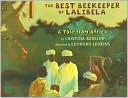
The Best Beekeeper of Lalibela: A Tale from Africa
by Cristina Kessler and illustrated by Leonard Jenkins

Almaz likes to taste the honey from the different sellers at the open-air market. She decides that one day her honey will be the best at the market. One day, Almaz goes to visit the men who keep the bees, and she tells them that she also wants to make honey. The men all laugh at her and tell her that beekeeping is only for men. This makes Almaz so upset that runs into a priest. He asks her what is wrong, and after she tells him, he says that she can keep bees if she wants to. One of the men tells Almaz to climb the tree to bring a hive down, but she cannot make it up the tree. The men laugh at her as she leaves, and they think that she has given up on beekeeping. Then three months later, Almaz starts selling honey at the market, and every one decides to buy her beautiful honey. Then one Saturday, Almaz is not at the market. Then she misses two more. When the priest goes to check on her, he finds that the bee hive she made in a little mud cone on the ground has been invaded by ants. Will Almaz be able to figure out a way to keep the ants out of her hive? Will she be able to sell honey at the open-air market again? Will she ever achieve her goal of being the best beekeeper of Lalibela?


Honey in a Hive
by Anne Rockwell and illustrated by S.D. Schindler

This nonfiction book is all about bees and the way that they make honey. The book talks about the different kinds of bees and what their jobs are within the hive, how bees are able to find the nectar and pollen they need to feed the other bees and make honey, how one bee is able to tell the other bees where a field of flowers are, how the nectar becomes honey, and how the queen leaves to create other hives of bees. The book also tells you how you can tell what kind of flowers the bees gather the nectar from, and at the very end of the book are some more facts about bees and honey.


A Taste of Honey
by Nancy Elizabeth Wallace

One day Lily opens the honey jar, looks and sniffs, and touches the honey, and then she asks her Poppy some questions. She asks, “Where does honey come from?” Her poppy tells her it came from the jar, but she asks him “But before that?” Lily’s Poppy tells her that it came from the store, from a truck, from a honey farm, from a honey harvest, from a hive, and from a honeycomb. Lily then asks him “before that?,” but he does not have an answer. Will Lily find out where honey comes from? The different pages also have a lot of information about the different steps in the honey making process. There are illustrations and explanations of each step of the process. At the end of the book is a honey game that can be played using the book and some honey facts.

Tuesday, September 7, 2010

September is National Chicken Month

September is National Chicken Month!


Why Did the Chicken Cross the Road?
by John Agee, Tedd Arnold, Jerry Pinkney, David Shannon, Mo Willems, and many others

We all know the age old question, “Why did the chicken cross the road?,” and many of us know that it was “To get to the other side.” However, there are many illustrators that have a different opinion of why the chicken crossed the road. Tedd Arnold believes that the chicken crossed the road to show an opossum that it could be done. David Shannon believes it was because the traffic light turned red, and the chicken could race away in his convertible. Jerry Pinkney believes that it was to get to a picnic with all of her friends. Harry Bliss believes it was to get away from the mutated zombie chickens from Mars. Each illustrator has a different theory that they have illustrated on each page, and some are really funny. How many other reasons can they come up with?


The Chicken Dance
by Jacques Couvillon

Don never really gets much attention from anyone, not even his parents. His mother is always talking about his older sister Dawn who died when he was just a baby, and he feels that he can never live up to this sister that he never met. He lives on Horse Island where people raise a lot of chickens, and people know a lot about the chickens that they raise. His family also raises chickens, because they have to have at least twenty-five chickens to keep the house that Don’s father’s uncle left him. His mother understands very little about chickens, and she hates taking care of the chickens and living on Horse Island. Don knows both of his parents are unhappy, but there is very little that can be done about it. He also knows that they are keeping something from him, but he can never figure out what it is. Don really likes the chickens and wants to take care of them, but his mother does not want him to go anywhere near the chickens. After his parents forget his eleventh birthday, his mother decides to let him take care of the chickens. Don learns everything he can about chickens, so that he can take good care of them. Then he decides to take part in the chicken-judging contest at the Dairy Festival. Don knows so much about chickens that he wins the contest. Then he gets lots of attention from the people in town and the kids at school. Leon Leonard, the popular kid who likes to make fun of him, even decides to be friends with him. Then one day he finds his birth certificate and discovers that his real name is Stanley, and he really knows that his parents are hiding something from him. What is the big secret that he is missing? Will he stay popular with his new friends and all of the people in town?


Chicks & Chickens
by Gail Gibbons

This nonfiction book is full of all kinds of facts about chickens. The book talks about the different ways chickens sing, what the differences are between chicks, hens, and roosters, some common breeds of chickens, how chickens lay eggs, how chicks grow in their eggs, and what the different names of the stages of a chicken are. At the end of the book are some more interesting facts about chickens, such as they can live to be about twelve years old, the egg can support up to nine pounds before it breaks, the most eggs laid by a chicken in one year is 371, and that each year in the United States, the chickens lay about 80 billion eggs.


Cock-a-doodle-hooooooo!

by Mick Manning and illustrated by Brita Granstrom

An owl is stuck in a storm one night and he looks for a place to get away from the storm, and at a farmyard, he found some place cozy and warm, where he fell fast asleep. The next morning, the hens were very surprised to see him in their henhouse. They decided to see if he would make a good rooster for them, because they needed a rooster around. Unfortunately, the owl is not good a pecking, scratching, and especially not cock-a-doodling. The speckled hen decides to teach the owl to be a good rooster. Owl learned how to act like a rooster, but as much as he tried, he could not cock-a-doodle. He gets mad when the hens start making fun of him and tells them that he is an owl and what owls do. Will the owl be able to prove himself to the chickens so that he can stay in the warm, cozy henhouse? Will he be able to do something that shows them an owl can be just as useful as a rooster?

Monday, August 30, 2010

Some New Books for August


The Hive Detectives: Chronicle of a Honey Bee Catastrophe
by Loree Griffin Burns with photographs by Ellen Harasimowicz

Bees are very important to people that like honey, beeswax candles, and of course, without bees, there would not be many others to spread the pollen from flowers, fruits, and vegetables (and so, without this pollen, there would be fewer flowers, fruits, and vegetables). This book starts by taking a look at the beehive, how it is inspected by the person who takes care of it, and what to look for while inspecting the hive. Then discussion turns to the problem with bees that we are facing. In November of 2006, Dave Hackenberg found that the bees he had left in 400 hives (twenty million bees) had disappeared. The bees had left everything and no other bugs had been in to steal the honey. This made him very worried about his other hives. Soon, other beekeepers noticed that something weird was going on in their hives, as well. Honey bees were disappearing all over and hives were being abandoned. A group of scientists formed the CCD Working Group to find out what was going. They collected samples from many different hives. They found that the bees from the hives that were in trouble were very, very sick. The scientists looked at the usual pests that can destroy hives, but they found that those causes were not the one they were looking for. One scientist looked at the diseases that the bees might have picked up, and they found that the infected hives had IAPV and the healthy hives did not. However, the scientists were not sure that IAPV, by itself, was the cause. The scientists agreed that there are many different things that might be adding to the problem and will continue to do research to find the right combination that is causing the collapse. Throughout the book, there is more information on bees, and at the end of the book is a section on how honey is collected.


Princess Says Goodnight
by Naomi Howland and illustrated by David Small

A little girl imagines she is a princess on her way to bed after leaving a ball. She thinks about all of the things a princess might do as she gets ready for bed, such as having some milk and chocolate éclairs, wishing on a star, having a bubble bath with special little towels to dry her toes, what she should wear to bed, and kissing her little “froggy prince” on his head. Will she have a lullaby sung to her or a bedtime story told to her? Will she get her bedtime kiss goodnight?


The Firehouse Light
by Janet Nolan and illustrated by Marie Lafrance

The fires in the small town used to be fought with hand-pulled carts that had water hoses on them, and all of the people in the town would bring their buckets and form “bucket brigades” to fight the fire. The cart with the water hose was kept in a shack, and it was hard to see the cart at night. One person would have to hold a lantern so that everyone could see. One day, a businessman gives the firefighters the gift of a little four-watt light bulb, which is never turned off. This little light bulb sees many changes happen to the firehouse, the firefighters, and the town. Soon, the firehouse has other electric lights, fires are telephoned in, and there is a new fire engine with a bell. After forty years the firefighters start wearing protective gear when fighting fires, and the town keeps growing bigger and bigger. In fifty years, firefighters are actually paid to fight fires, and stay at the firehouse so they can be ready for a fire. Things continue to change, and soon, the little light bulb has been burning for one hundred years. The town even throws a birthday party for the little light bulb.


Flight of the Outcast: The Academy, Year 1
by Brad Strickland

Asteria Locke’s world both ends and begins at her farm on the remote planet of Theron. Asteria had wanted something more than a life of farming before then, but then her farm and family are attacked. Asteria is put into a safe place by her father, and by the time she wakes up and gets out, she finds that her father is gone. Life on Theron would not be what she wants, so Asteria decides to use her cousin, Andre’s Royal Military Academy invitation, as it says A.F. Locke (which is her name, too). She wants revenge on those raiders who destroyed her family, and she has a better chance of getting it through the academy. At school, Asteria feels like an outcast, and she has a hard time making friends. One of the Aristo boys has decided to make her life difficult, too. On her first flight in pilot training, she enjoys every minute of her flight. Then the Aristo’s uncle challenges Asteria to a court-martial, since he found out that she had used her cousin’s papers, but the charges are dropped, because he only brought up the charges to keep her from beating his nephew in a war game. Soon, however, the pressures of school and everything else start getting to her, and she worries that she will not be able to control herself around the Aristo. Will Asteria be able to make it through the rest of the year and get to work on board a ship for the summer? Will her father’s past secrets end up causing her trouble?

Monday, August 23, 2010

Back to School

Back to School!


Messing Around on the Monkey Bars and Other School Poems for Two Voices
by Betsy Franco and illustrated by Jessie Hartland

This book of poetry can be read by two people, as the lines for person one to read is in plain type and the lines for person two to read are in bold type. There are also some lines that both can read together. The poems are funny, and they are about different parts of being back at school, such as the bus ride, reports for class, being in the library, the lines at lunch, homework, and many others. At the end of the book are some suggestions to make the reading of the poems a little more exciting.


The Reinvention of Moxie Roosevelt
by Elizabeth Cody Kimmel

Moxie Roosevelt Kipper is used to people expecting something extraordinary from her due to the name she was given. She always sees the disappointment on their faces when they realize she is just an ordinary girl. She is tired of being the one overlooked, and she is ready for something exciting to happen to her. She decides that if she ever gets out of the school she is going to, she will become someone who matches her name. She will become someone who is fun and outgoing and who stands out. Then Moxie gets her chance when her parents decide to send her to Eaton Academy for Girls, a boarding school. Her talent at piano playing has earned Moxie a scholarship to the school, and she cannot wait to start. She is also ready to start becoming a new person. Unfortunately, she has trouble deciding on the new personality she would like to choose. She meets people like Spinky, her roommate, who fits into her “Detached, Unique, Coolly Knowing Individual” personality, and Moxie tells her things that she would expect someone DUCKI to know, which are not necessarily true. Another girl she meets is Haven, who fits into her “Mysterious Earth Goddess” personality, and she also tells Haven things that would fit with that personality, which are also not necessarily true. All of these stories and personalities could get confusing, though, so Moxie decides to keep a Personality Log to remember what she told people. Will this plan to reinvent herself really work for Moxie? Will she get too caught up trying to people different people that she forgets how to be herself? What happens if anyone finds out all of those things she told people that were not necessarily true?


First Grade Jitters
by Robert Quackenbush and illustrated by Yan Nascimbene

A little boy is upset, because he does not know what to expect when he starts first grade. So he decides that he is not hungry, does not want new shoes for school, and acts a little grumpy. The little boy liked Kindergarten where he got to play with his friends, but what if his friends are not in his class? What if he has to do things that he does not know, such as reading, spelling, or doing math? What if he cannot understand the teacher? So he decides to tell his mother that his leg is hurt, and he cannot possibly go to school that way. Then his friends call, and he goes over to play with them? Will being with his friends make him feel better? Will he be less scared of starting first grade?


This School Year Will Be the Best
by Kay Winters and illustrated by Renée Andriani

On the first day of school the teacher asks her students what they hope will happen that year. Each student shares one thing that they hope for. Some want the best seat on the bus, to look good in the school pictures, to bring their pet for show-and-tell, to take a field trip to someplace cool, and even not to be a vegetable in the school play or lose things in their desk. There are many other hopes that are given, and some are big while others are little. The teacher’s one hope is to get to know everyone.

Friday, August 13, 2010

Glasses


Arthur’s Eyes
by Marc Brown

Before Arthur got his glasses he could not see what was on the board, he had to hold his book close to his nose, and he missed the basket when playing basketball. So Arthur’s parents take him to the optometrist, who tells Arthur that he needs glasses. Arthur picks out a pair and wears them to school the next day. The other kids do not wear glasses, and they make fun of Arthur’s glasses. He decides that he does not want to wear the glasses anymore. Unfortunately, without his glasses, Arthur cannot see the board again, and he may just end up in a room he should not be in. Will Arthur wear his glasses and be able to see clearly? Will the other students stop teasing him and making fun of his glasses?


Princess Peepers
by Pam Calvert and illustrated by Tuesday Mourning

Princess Peepers loves her glasses, and she has many different pairs for many different occasions. Then she attends the Royal Academy for Perfect Princesses, and the other princesses there make fun of her glasses. This upsets Princess Peepers who runs out of the room. She decides to stop wearing glasses and goes back to show the other princesses. Unfortunately, without her glasses, Princess Peepers ends up going the wrong way to find the other princesses, puts on an outfit that does not match to go to the ball, and ends up on the tower instead of in the ball room. Will Princess Peepers ever be happy with her glasses again? How will the Prince feel when he meets Princess Peepers with her glasses?


The Patch
by Justina Chen Headley and illustrated by Mitch Vane

On Becca’s fifth birthday she goes to the doctor’s office to get some shots and to check her eyes. The shots go well, but the doctor who checks her eyes tells her that she will need to wear glasses and an eyes patch, so that her left eye can become stronger. Becca does not want to wear glasses, but her mother insists that she get them. The next morning, though, Becca does not want to go to school with her glasses and eye patch. Her brother tells her that he will let her borrow his pirate outfit for the day. All day at school, whenever the other children ask her about her glasses and eye patch, Becca tells them that she is a pirate, private eye, and a one-eyed monster. The other children have a lot of fun pretending with her. Will Becca tell the other children the real reason why she wears an eye patch and glasses? Will the other children be okay with it?


Glasses: Who Needs Em?
by Lane Smith

A doctor tells a young boy that he needs glasses, but the young boy is not convinced. The doctor tells the boy that lots of people wear glasses. Then he starts telling the boy exactly who wears glasses: parents, sisters, inventors, little green men, pink elephants, cats, dogs, robots, tall giraffes, potatoes, sock puppets, and many others. The boy does not believe the doctor. Will the doctor be able to convince the boy that all of these things and more wear glasses? How will he convince the boy to wear glasses?

Monday, August 9, 2010

August 10th is Lazy Day

August 10th is Lazy Day!


Lazy Jack
by Vivian French and illustrated by Russell Ayto

Lazy Jack was the laziest person. He would get out of bed in the afternoon, eat, drink, and then go back to bed again. His mother did not like that Jack was lazy, so she asks the builder to take Jack to work with him. So all day Jack carries things for the builder and then receives a coin at the end of the day. On the way home, though, Jack loses the coin and is too lazy to go look for it. His mother tells him to put the next one in his pocket. Jack’s mother then asks the farmer to take Jack to work with her. Jack spends the day feeding all of the animals, and when the farmer gives him some milk, he remembers what his mother said and puts the milk in his pockets. Of course, the milk spills out, and his mother tells him that he should have carried the milk on his head. Then she asks the dairyman to take Jack to work with him the next day. What will Jack get paid to work for the dairyman? Will he be able to get it home with no problems? Will Jack ever learn to carry his payment the right way and get it home safely?


The Little Red Hen
by Paul Galdone

Once upon a time there was a cat, dog, mouse, and a little red hen. The cat, dog, and mouse like to sleep all day long, while the little red hen does all of the housework, the cooking, and working out in the garden. One day she finds some wheat while she was out in the garden. She asks if anyone wants to help her plant it, but the other animals are too lazy to get up and help. When the wheat is ready, the little red hen is the only one who will cut the wheat, take it to be ground into flour, and make it into a cake. Soon the cake is done, and the hen asks who will eat the cake. Will the other animals want to eat some of the cake the little red hen has made? Will the little red hen let them eat any of the cake after she had done all of the hard work? How will the other animals act towards the hen in the future?


How Lazy Can You Get?
by Phyllis Reynolds Naylor and illustrated by Alan Daniel

Timothy, Amy, and Douglas John Megglethorp were good children when they were alone, but when they got together, weird things were known to happen. Timothy likes to be lazy and lie around. Amy does not like to be ordered around, and Douglas John does not want to grow up and lose his imagination. This is why their parents worry before they leave the children for one week during the summer. The children’s parents hire Miss Brasscoat to take care of the children, but the children soon find out that Miss Brasscoat certainly does not look at the world the way they do. She does not allow anyone to lie around, she always orders them around, and she always wants them to finish everything on their plate. The children know that this means that there will soon be trouble. She is also always asking them “How annoying, revolting, lazy, and ignorant can you get?” So the children decide to show her, every time she asks one of those questions. The children also feel sorry for Miss Brasscoat, because she never smiles. So Douglas John takes matters into his own hands in order to show Miss Brasscoat how easy it is to smile. Will Miss Brasscoat ever smile, look happy, or just enjoy the children’s company? Will the children be able to make it the rest of the week with Miss Brasscoat there?


The Boy of the Three-Year Nap
by Dianne Snyder and illustrated by Allen Say

There was once a poor widow and her son who lived on the banks of the Nagara River. The widow sews kimonos for the ladies in town, and the work seems to never end. Her son, Taro, is very clever, but he is also very lazy. Taro only likes to eat and sleep, and so he is called “The Boy of the Three-Year Nap.” There is a rich merchant who builds a mansion near Taro and his mother’s house, and Taro likes to watch the merchant and his family. He likes the way that the family lives. Taro becomes even lazier as time goes on, and his mother gets on to him about going out and getting a job. Taro has a plan, though, and he asks his mother to sew him a black kimono and hat. The next evening Taro puts on the kimono and paints his face. At the town’s shrine, Taro appears to the merchant as the ujigami, and the merchant is told that his daughter must marry Taro or turn in to a clay pot. The merchant is scared for his daughter, and so he goes to Taro’s house the next day and tells Taro’s mother that they must be married. She has several reasons why they cannot marry, such as the house needs repair and that it is much too small for his daughter. The merchant does everything he can to make the marriage happen, and the house is fixed up and made bigger. Will that be enough for Taro’s mother to allow the marriage? Will she ask anything else of the merchant? Will Taro be happy with the way his plan works out?

Tuesday, August 3, 2010

August is National Peach Month


Easy as Pie
by Cari Best and pictures by Melissa Sweet

Jacob loves to watch his favorite TV show, Cooking with Monty. Chef Monty is baking and pie, and so Jacob decides to make one, too. Jacob decides to make a peach pie, and he gathers up his ingredients and puts on his apron and baking hat. Then his sister Charlotte comes in to tell him that it is almost time to go. The family is going to Alfredo’s to celebrate their parents’ anniversary. Jacob continues to follow Chef Monty’s rules and bake the pie, instead of getting ready. When Charlotte comes back, she decides to read her book while Jacob continues to bake his pie. When their parents ask if they are ready, Jacob and Charlotte reply, “Almost.” Jacob’s parents come in to the kitchen to see if the children are ready, but Jacob needs to wait until his pie is finished. The pie is soon done cooking, but then it needs to cool. Jacob’s parents say that they need to leave and go to the restaurant, but Jacob wants to wait on his pie. Will the family end up making it to the restaurant? Will the pie turn out alright? At the back of the book, there is a recipe for Jacob’s Happy Peach Pie.


Peach Heaven
by Yangsook Choi

In Puchon, South Korea in 1976, Yangsook sat around thinking about a peach garden instead of doing her homework. When she starts her homework assignment, she has to write about the best thing in her home town. She thinks the best things are peaches. Puchon was known for the best peaches in Korea, and Yangsook loves them, even though she does not get many because they are expensive. Suddenly, Yangsook’s grandmother calls her to come look outside. It is raining really hard, and the water has reached the top of the porch. Yangsook, her brother, and her grandmother all see something falling off of the roof. Yangsook ties herself to the porch and then goes to see what it is. She sees that the things are peaches, and it looks like it is raining peaches as well as rain. Yangsook gathers the peaches up and puts them inside her umbrella. The whole family gets to eat the peaches, and this makes Yangsook very happy. Yangsook soon worries about the farmers who had lost their peaches. The next morning Yangsook and her friends take all of the peaches that they have gathered up into the mountains, and they tie the peaches back onto the trees with yarn. Will the farmer’s be happy that the children brought back the peaches? Will they be able to get most of their peaches back?


Peach & Blue
by Sarah S. Kilborne and paintings by Lou Fancher

One day a blue-bellied toad is resting under the shade of a tree, when he feels raindrops on his head. When he looks up at the sky, though, there are no rain clouds. Then he noticed a peach hanging from the tree, and saw that the drops were coming from the peach, who was crying. Blue, the frog, asks Peach what is wrong, and she tells him she wants to see the rest of the world before she is picked off of her tree. Blue tells her about where he lives and all of his brothers of sisters, and he tells Peach that he wants to help her. Blue gets all of his brothers and sisters to help him get Peach off of the tree, and then he gets his brothers and sisters to help him find a bowl and put Peach in it. In this bowl, Blue is able to push Peach around to see the grass, moss, ladybugs, sky, swans, whippoorwills, and even damselflies. Peach even helps Blue to see things that he had never noticed before. Will Peach be able to see everything that she wanted to see? Has Blue made a new friend?


Three Sacks of Truth
adapted by Eric A. Kimmel and illustrated by Robert Rayevsky

There was once a king who likes peaches, but he does not like paying for the peaches that he eats. So he announces to the kingdom that he will give his daughter to be married to the man who has the perfect peach. This is just a trick to get free peaches, though, and the king does not intend to have his daughter marry anybody. In that kingdom, there lives a widow with her three sons, Pierre, Pascal, and Petit Jean. The widow has grown a peach tree that has three perfect peaches on it. So she sends Pierre with the first peach. Pierre is rude to the lady at a holy well, and he tells her that he has frogs and toads in the basket, when she asks about what is inside. When he gets to the king, Pierre finds that there are frogs and toads in the basket, and the king has him thrown out. The same thing happens to Pascal. Then it is Petit Jean’s turn. He is the cleverest son, and so he is polite and tells the woman at the well exactly what is inside his basket. For his honesty and politeness, she gives him fife to use with the king. When Petit Jean shows his peach to the king, the king announces that it is a perfect peach. He did not want Petit Jean to marry his daughter, though, so he gives Petit Jean another job. Will Petit Jean be able to do what the king wants? Will he get to marry the Princess? How will he get the king to keep his promise?