Monday, June 7, 2010

June is National Rose Month

June is National Rose Month


The Blue Rose
by Maurice Baring and pictures by Anne Dalton

There was once an Emperor in China who had a beautiful and wise daughter, and though he was old, he wanted to see her married to someone who was worthy of her before he died. So he decided that only the suitor who brought back the Blue Rose would marry his daughter. Many of the suitors said this was impossible and left, but many of the others went looking for this Blue Rose. One suitor went to a nearby kingdom and stole a large sapphire in the shape of a rose, but this was not the Blue Rose. One suitor went to a shopkeeper for a blue rose, and the shopkeeper died a white rose blue. This was not the rose that the princess was looking for, though. The Lord Chief Justice had a china cup with blue roses painted on it made, and though the princess kept the beautiful cup, it was not the blue rose she was looking for. Will any suitor be able to find the Blue Rose? Will the princess be happy with the suitor who finds it?


Time to Smell the Roses
by Michael Hoeye

Hermux Tantamoq is busy preparing for his wedding when he reads an article about a squirrel’s body that had washed up on the shores of Thorny End. The mayor says it was an accident, but Hermux is not convinced. There is a battle going on between Reezor Bleesom and his rival, Tucka Mertslin over their cosmetics and perfume in Thorny End (which could be part of the mystery). The clocktower needs repairing, too, and Hermux hopes he (as a watchmaker) can get the job. He also tries to buy a bouquet of roses for his fiancée and finds a very strange bee there with a monogram on its stomach. Is this bee tied to the mystery of what’s going on in Thorny End? When he is called by the mayor of Thorny End, he thinks that he going to fix the clocktower. While he is at Thorny End, he finds that he is being hired to look for the mayor’s son, instead. During his investigation, Hermux finds something that ties the missing son and those roses he bought for his fiancée to Tucka Mertslin and her Institute of Positive Thinking, and then he finds out that the bees (like the one that stung him) have a tie to the Institute, too. Will Hermux be able to find the missing son? Will he be able to figure out what is going on at Thorny End?


Rosamund
by Janice Johnson and illustrations by Deborah Haeffele

In England during the reign of Henry II, a new rose grew that was different than any other rose that had grown before. The rose was named Rose Mundi, and its name came from the wife, Rosamund, of the nobleman of the lands where it grew. Over the years, the daughters of the family were often named Rosamund. As time went on, and England changed, the land of this family grew smaller and smaller, and soon, one member of the family had to move his family to America. His daughter, Rosamund, brought some cuttings from a rosebush with her. Then as people moved west, the roses traveled with the family into the Oregon Territory. Rose always had the rosebush there at her home, and when she became an old lady, even though the house had changed, she still had these roses in the fence. Rose’s great-great granddaughter found the land where the house had once been, and she gathered some cuttings of the rose to put in her garden. Will the rose still continue to live in this family’s garden? Will the name Rosamund still continue to be a family name?


Aunt Mary's Rose
by Douglas Wood and illustrated by LeUyen Pham

Douglas’s Aunt Mary had told him that if he took care of a rose, one day a little bit of him would be inside it. Douglas looked as close at the rose as he could, but he could not see any of himself in the rose. He tells Aunt Mary about it, and she tells him it is a feeling that you get, not something that can be seen. Then she tells him a story about when she was a little girl and her father told her about taking care of the roses and becoming a part of them. Then when her nephews (Douglas’s father and uncle) had no place else to go, she had helped take care of them when they came to live with their grandparents. Mary would make sure that ate their vegetables, wake them up in the mornings, and read them stories at bedtime. The boys also helped with the chores, and Douglas has also helped Aunt Mary with some of those same chores. After grandpa died, Mary took them out to the rosebush and told them what grandpa had told her. They also helped take care of the rosebush like their aunt and grandfather. When they had to move into town because they could not afford to live on the farm anymore, they took the rosebush with them and kept taking care of it. Soon both boys were grown up, and they went off to war. Douglas’s uncle did not make it back from the war. However, parts of both grandpa and Douglas’s uncle are part of the rosebush, and if Douglas takes care of it, he can become part of it, too.

Tuesday, June 1, 2010

Some New Books for May


Small Florence: Piggy Pop Star!
by Claire Alexander

Florence was shy and small but happy, and she has two older sisters. Her sisters take singing lessons, and Florence wishes she could be a ”piggy pop star.” So Florence sings in secret, and soon she is singing to her friends. Then one night, Florence and her sisters hear an announcement on television where the winner of a singing competition will get to perform on television. Florence wants to sing with her sisters, but she is too shy and nervous to sing for her sisters. So they tell her that she cannot sing with them. Florence does listen to them rehearse, though, and soon, she has their songs memorized. The night of the competition, many singers were there to join the competition. Florence waited and waited to see her sisters. However, when her sisters get onto the stage, they are suddenly shy and nervous. What will Florence do to help her sisters out? Will she become the “piggy pop star” that she dreams of becoming?


Miss Brooks Loves Books (and I Don’t)
by Barbara Bottner and illustrated by Michael Emberley

Miss Brooks the librarian loves books, and she loves to wear different costumes when she reads different stories to the children. One little girl does not understand why Miss Brooks gets so excited about books. In May, Miss Brooks tells them about Book Week, and that she wants them all to choose and book, wear a costume, and tell the rest of the class about it. The little girl tells her that she does not like books the same way, but Miss Brooks believes that she will find a book that she really likes. Miss Brooks gives her book after book, but she cannot find one that she likes. Then she finds one about an ogre with warts. Which book do you think the girl likes? Will she like sharing this book with the other children?


The Jellybeans and the Big Book Bonanza
by Laura Numeroff and Nate Evans and illustrated by Lynn Munsinger

Anna loves to read, and she always seems to have a book with her. She always likes going to the library to find new books to read. Her friends all have things they love, too, such as Emily loves dancing, Nicole loves soccer, and Bitsy loves painting. They all love to go to Petunia’s, though, and share their favorite candy, jellybeans. The girls decided to call themselves “The Jellybeans,” because they were all different but went well together. In school, they were all assigned a book report for a Book Bonanza. Anna was happy to take the other Jellybeans to the library with her. The librarian helps Anna find books about dancing, soccer, and painting for her friends to read. Anna also finds a book about fairytales that she would love to do a report on. The next day, Anna gets scared when it is her turn to share her report. Will she be able to give her report to the class? Will her friends help her through this scary time?


The Sandwich Swap
by Queen Rania Al Abdullah and Kelly DiPucchio and illustrated by Tricia Tusa

Salma and Lily are best friends, and they have a lot of fun drawing and playing together. They also eat lunch together. Lily eats peanut butter and jelly sandwiches and Salma eats hummus and pita sandwiches every day for lunch. Both of the girls believe that the other’s sandwich looks gross, and one day, Lily decides to say something about it to Salma. Salma gets very angry, and insults Lily’s sandwich, too. The girls are angry with each other and no longer draw or play together. At lunch the girls do not sit at the same table any more, and the other children also choose sides and say mean things back and forth to one another about food. Then one day, this leads to a food fight, and both Salma and Lily get into trouble for this. Will they be able to get past their differences and be friends again? Will they get the other children to be friends, too?

Monday, May 24, 2010

May 25th is National Tap Dance Day

May 25th is National Tap Dance Day
Here are some dancing books to enjoy.


Prancing Dancing Lily
by Marsha Diane Arnold and pictures by John Manders

The other cows are concerned that all Lily does is prance and dance, and this can be very distracting when they all line up to go into the barn for milking. None of the cows look forward to the day when Lily will lead the line. So one day Lily decides to go find a place where she will fit in as she dances and prances. First, she goes to a square dance, but she writes home to tell the other cows that it is not where she fits. She also tries out as a dancer for the Radio City Music Hall in New York City and on board a cruise ship, but she does not feel that either place is a good fit for her. Soon she travels all over the world, but she is still unable to find a place to fit in. Then on a small island in the Caribbean, Lily learns a dance that will help her keep the cows in line back home. What do you think that dance is? Do you think the other cows will like it?


Meet the Dancers: From Ballet, Broadway, and Beyond
by Amy Nathan

This nonfiction book is about many different kinds of famous dancers, how they decided they wanted to dance, what training they had to become dancers, and the kind of dancing that they do. There are pictures of the dancers taken while they are dancing and also a picture from when they were children. Becoming a dancer takes a lot of hard work, and each dancer shares how much work they have put into their dancing, and there is also a sample of their schedule, so you can see how much work it takes to put on the shows that they perform in. At the end of the book, there is a glossary with definitions of many different types of dancing or dancing terms.


Fritz Danced the Fandango
by Alicia Potter and illustrated by Ethan Long

Fritz is one of the few goats that know the fandango. He dances the fandango all over the place. The other goats like to make fun of Fritz’s fandango, and he decides that he would much rather be with a herd that did like to dance the fandango. So he sets off to find this new herd. On his journey he meets a sheep named Liesl who does not dance the fandango, but she does like to yodel. She comes with him on his search. Fritz and Liesl soon meet Gerhard, a dog who plays the glockenspiel. Gerhard joins them on their search. Fritz cannot find another goat who can dance at all, and soon he goes off to be sad by himself. Then he hears dancing, and what do you think that he found? Did he find a new herd that can also dance?


Dancing Granny
by Elizabeth Winthrop and illustrated by Salvatore Murdocca

One night a granddaughter invites her grandmother to go to the zoo, but her grandmother is already ready for bed and does not want to go. The little girl tells her grandmother that the animals are getting ready for her at the zoo, and she gets her grandmother ready to go. At the zoo, the animals are ready to party. Her grandmother has a lot of fun dancing with the animals, and each animal does a different dance with granny. Will her grandmother enjoy the party and the dancing? Will she want to return?

Monday, May 17, 2010

Gardens


Grow: A Novel in Verse
by Juanita Havill and illustrated by Stanislawa Kodman

Kate’s Aunt Berneetha wants to start a community garden on an empty lot, and Kate is very excited to be helping her aunt out. They start out by clearing the lot, and then get to work making the rows to plant in. One young man soon joins them in the garden, and then a local doctor donates some tomato plants. Little by little more and more people start working in the garden. Then the city council decides to have a meeting to discuss rezoning the area, and that will end up causing a parking garage to be built where their garden is. Aunt Berneetha decides to fight this decision to sell the land and make it a parking garage, and she needs the help of others in the neighborhood to change the minds of the people who want the parking lot. Will they be able to stop the garden from being destroyed? Can they change the councilors’ and the old owner son’s mind about building the parking garage?


Mrs. Spitzer’s Garden
by Edith Pattou and illustrated by Tricia Tusa

Mrs. Spitzer is a teacher, and every year, the principal gives her a packet of seeds to help grow. Mrs. Spitzer plans her schedule and makes sure she has the tools she needs to help those seeds grow. Mrs. Spitzer takes very good care of her garden by planting the seeds in a good place, watering them, helping them get plenty of sun, and protecting them from weeds and pests. Different plants need different things, and Mrs. Spitzer works hard to make sure that every plant gets the attention that it needs. She continues to care for her garden as the seasons change. Then comes the time that her job is over, but those plants will continue to grow on and on. Next year, Mrs. Spitzer will be ready for some new seeds to grow into plants. What do you think are like those plants? What do teachers usually help make grow?


Rose’s Garden
by Peter H. Reynolds

Rose has traveled all over the world in her teapot, and she has collected seeds from all over so she can remember where she got them. When her teapot became full of seeds, Rose decides to plant a garden. When she comes to a big city by the ocean, she decides to take a look around before planting her garden. While exploring, she found a place in the city that was empty, and she thought that it needed some color. Rose got the soil ready for planting her seeds, but when she got back to her teapot, she found that the birds had eaten most of the seeds. She took the few that were left and planted them, but nothing seemed to come of it. Will Rose’s Garden grow from those seeds she planted? Can she make that empty lot beautiful like she wanted to?


Garden Crafts for Kids: 50 Great Reasons to Get Your Hands Dirty
by Diane Rhoades

This nonfiction book is about starting a garden and taking care of it. There are chapters on how to begin growing a garden, how to design a garden, how to care for it, some easy to grow vegetables and flowers, and seven projects that you can use your garden for. There is also a chapter on how to take of your garden during the months when there are no plants. The projects include creating a bean tepee, making toilet-paper seed tape, creating garden markers, making topiary, making a seed caddy, and some cupcake recipes that you can cook using vegetables, fruits, and flowers from your garden. There is even a recipe to create your own homemade bug spray!

Monday, May 10, 2010

Mother Goose


Wee Sing Mother Goose
by Pamela Conn Beall and Susan Hagen Nipp

This is both the book and CD of Mother Goose rhymes that you can sing along with. There are 71 rhymes and each rhyme has the words and the musical notes, and there are also additional verses to the songs that you may or may not be familiar with. Each rhyme also has a little picture of an animal acting out the rhyme. The CD is one hour long.


Mother Goose Unplucked: Crazy Comics, Zany Activities, Nutty Facts, & Other Twisted Takes on Childhood Favorites
by Helaine Becker and illustrated by Claudia Davila

Within this book are fairy tales and rhymes that are retold in some very interesting ways, and there are some activities that are tale and rhyme themed that you can attempt with your friends, such as “Kiss the Frog” where you are blindfolded and have to kiss the frog (where you kiss the frog determines how many points you receive). There are also some recipes, riddles, comics, jokes and plenty of different kinds of games and activities to try. At the very end of the book, there is a “What’s Your Fairy Tale Personality?” Quiz where you can answer the questions to find out what fairy tale character you would be.


The Neat Line: Scribbling Through Mother Goose
by Pamela Duncan Edwards and illustrated by Diana Cain Bluthenthal

There once was a baby scribble that great into a “neat line.” Then one day the neat line decided to go into a real book and chose Mother Goose Nursery Rhymes. The line talks to the characters of the rhymes, but the rhyme is also there. When Little Boy Blue loses the sheep, the line turns into a trumpet that helps bring them back. Then the line becomes a path that leads to the well for Jack and Jill so that they don’t go rolling back down the hill. The line also helps in Mary’s garden and Little Miss Muffet with her spider problem. Then the line becomes the Man in the Moon and calls it a night.


Mary Engelbreit’s Mother Goose: One Hundred Best-Loved Verses

Mary Engelbreit has chosen one hundred of her favorite Mother Goose rhymes and illustrated them. She starts with the Mother Goose rhyme, and the illustrations that she drew to go with the rhymes are very detailed, colorful, and beautiful
.

Monday, May 3, 2010

May is National Photo Month

May is National Photo Month


The Kid’s Guide to Digital Photography: How to Shoot, Save, Play With, & Print Your Digital Photos
by Jenni Bidner

This is a nonfiction book that focuses on digital photography, and has information on camera basics, how to take pictures, some software that can be used to work with digital photographs, printing the photographs, and ideas for projects or presents. There is a chapter that discusses different types of digital cameras in order to decide which will work best. There is also a chapter on figuring out how to take the best photographs that you can with suggestions on angles and backgrounds. At the end of the book is a glossary.


Photography
by Alan Buckingham

This nonfiction book covers all aspects of photography from the camera obscura created during the Renaissance to the digital camera and camera phones of today. There are many pictures of the cameras themselves and photographs that were taken with the camera being discussed. The book also discusses different parts of photography, such as studios, color, movement, film, and developing film. There are also some pages about extreme photography, photography taken of space, and underwater photography. At the end of the book, there is a timeline and a list of museums of photography.


Photographer Mole
by Dennis Haseley and illustrated by Juli Kangas

Mole was a photographer that enjoyed taking portraits. He always took photographs of important events. He was often invited to dinner where he would tell stories about the pictures he had taken. All the pictures he had taken hung in the homes of those he had photographed, but Mole felt that something was missing. He did not know what it was, but it was making him unhappy. Then one day, Mole decided that he needed to go away and find what was missing in his pictures. While Mole is gone, he is missed at dinners. He continues to send them photographs, but he did not seem to find what he was missing. Will Mole be able to find what is missing in his photographs? Will he make it back home again?


Smile!
by Geraldine McCaughrean

A photographer is involved in a plane crash, but he survives with only a Polaroid camera. Flash is found by a group of people that have never been to a city, and they have no idea what camera or photographs are. After taking a picture of a couple of children, the people are in awe of the little box that can capture moments in time. There are many things of which the people want photographs taken, such as their new cow and warriors. However, Flash only has nine pictures left, and he lets them decide what the photographs should be. Flash is happy that he could introduce photography to this group of people. He also starts trying to lend a hand in the work, but he finds it hard to locate a place in the group where he could be useful. After a feast is given to celebrate the food that they have gathered, Flash is happy to be able to capture these moments that the people will be able to enjoy latter, even if future harvests do not go as well. How will Flash use the rest of the photographs that he has left? Will he be able to get back home?

Monday, April 26, 2010

April 30th is National Honesty Day

April 30th is National Honesty Day


Arthur’s Classroom Fib
by Marc Brown

On the first day of school, Mr. Ratburn gives everyone the homework of writing a report about their summer vacations. Arthur’s friends all did exciting things like Buster a Muffy taking trips on ships and airplanes, Francine’s summer at tennis camp, and Binky’s trip to Disney World. Arthur knows that his summer was very boring compared to everyone else’s. That night, he decides to exaggerate a story where he rescues his sister D.W. from drowning, an octopus, and a shark. After reading the story aloud, D.W. tells him that it is a fib, and that he would get into trouble if he used it as his report. Will Arthur share the exaggerated story with everyone, or will he tell the real truth about his summer?


Princess K.I.M. and the Lie that Grew
by Maryann Cocca-Leffler

Kim was starting her first day of school in a new town, and she was afraid that the other children would not like her. Her father tells her that they will if she will just be herself. Whenever the teacher introduces Kim to the other students, one girl replies that her name is also Kim. Kim wanted everyone to like her so she told a little lie. She said that her name was K.I.M. for Katherine Isabella Marguerite. She also told the teacher that she was from a royal family, and the teacher bowed to her. The other children gathered around her later, and she decided to lie a little bit more. She told them that she was a princess, and that her grandmother is a queen. The children see her walking to school with her father who is wearing a suit, and as he hands Kim her lunch, he calls her princess. The children then really do believe that Kim is a princess. The other children then start doing little things for Kim, such as opening the door, carrying things, and giving Kim their lunches. Soon Kim is asked by the other students for autographs and pictures, and her lie keeps getting bigger and bigger. Then she tells everyone that her grandmother is coming to town. The other children really want to meet the queen. Will the other children find out about her lies? Will they still want to be her friends after they find out the truth?


Neil Armstrong is My Uncle & Other Lies Muscle Man McGinty Told Me
by Nan Marino

Tamara Ann Simpson seems to be the only person on Ramble Street that knows that ten-year-old “Muscle Man” McGinty is a liar. McGinty is a new kid on the street, and he likes to exaggerate (which can be seen by some as lying). No one but Tamara seems to worry that Muscle Man tells these tall tales, and she wonders why that is. Muscle Man McGinty is a foster child, and to Tamara, he took away everything that had to do with her friend Kebsie when she moved away. That is why she is determined to prove him the liar that she knows he is. Then one day, Muscle Man states that he can beat everyone in the neighborhood at kickball (their favorite game), and Tammy knows that Muscle Man will finally be proven as a liar. No one in her neighborhood can back down from a challenge like that. Due to many obstacles, the game ends up lasting for several days, and to Tammy’s annoyance, the other kids on the street take it easy on Muscle Man. Will Muscle Man lose his bet? Will Tammy prove to everyone what she believes about Muscle Man, or will she find out the real reasons for his lying? Will she want to be his friend?


The Honest-to-Goodness Truth
by Patricia McKissack and illustrated by Giselle Potter

One day, Libby’s mother asked her if she had fed and watered O’l Boss. When she lies to her mother, her mother tells her to “Speak the truth and shame the devil,” and then punishes her for lying by not getting to play with her friend and having to stay on the porch. Libby decides from that day on to never lie again. At church, Libby tells her friend Ruthie Mae that she likes her dress, but that she has a hole in her sock, and as she runs by, Libby does not see the hurt on her friends face. After church, Libby asks Ruthie Mae to walk home, but Ruthie Mae tells Libby that what she said was mean, even if it was the truth. The next day at school, Libby tells the teacher that Willie did not do his homework, which gets him into trouble. She continues to tell the truth all day, but by the end of the day, no one wants to talk to her. She is very sad and tells her mother what happened. Will Libby’s mother be able to teach Libby about when it is appropriate to tell the honest-to-goodness truth? Will Libby be able to stop her friends from being mad at her?

Monday, April 19, 2010

Some New Books for April


Aliens & UFOs
by Chris Evans

This nonfiction book discusses aliens and how strange things that have happened on Earth are thought, by some people, to be the work of alien visitors. There are also facts are how the name “flying saucer” became used when talking about UFOs, and how many reported sightings of UFOs there are every year. The book also discusses aliens and what they may look like, and the popular aliens from movies and television, such as Alien and Dr. Who. There are also discussions of alien hunters, kidnappings by aliens, ideas of why the aliens may come here, and finally, if the aliens might just be living among us right now. The pictures are very cool, and there is even a pop-up spaceship. There is even a test at the very end of the book to see how much was learned.


First Rain
by Charlotte Herman and illustrated by Kathryn Mitter

Abby and her parents are at the airport and are ready to fly to their new home in Israel. Abby and her grandmother will miss each other very much, but her grandmother gives her a “plane letter” to read as she is flying. Abby reads her letter, and when she gets home, her grandmother notices the letter that Abby wrote for her. They talk to each other over the phone and by email. Abby tells her grandmother all about visiting Jerusalem, and going on a hike (or tiyul) and to the marketplace (or shuk) and sends pictures, too. Abby also sends her grandmother some mud from the Dead Sea that is supposed to be good for your skin. Her grandmother sends Abby a picture of herself wearing the mud on her face. Her grandmother also sends her some leaves that have changed color, and Abby cannot wait for the first rain of the season. Will the first rain ever come? How will Abby share it with her grandmother?


Big Nate: In a Class by Himself
by Lincoln Peirce

This book is a mixture of illustrations and words that discusses a day in the life of Nate Wright. The illustrations are much like comic strips. Nate believes that he is “destined for greatness.” His day, however, does not seem to be going that way. He thinks he forgot about a history test, but then he finds out there is not a test and gets a favorable fortune in a fortune cookie. Unfortunately, it seems that the fortune cookie is wrong. Three classes down, and Nate has three detentions. Then the day only seems to get worse. Will Nate be able to follow the fortune and “surpass all others?” Will his day get any better?


Fly Free!
by Roseanne Thong and illustrated by Eujin Kim Neilan

Mai stops to see the sparrows that are for sale next to the temple gate. The vendor lets her feed the birds, but Mai would really like to buy them and set them free. That is why the vendor is selling the birds, so that customers can buy them and set them free as a good deed. Mai, however, cannot afford to set any of the birds free, so she hopes that someone will. Then a girl named Thu comes to the temple and removes her sandals. Mai has never seen such beautiful shoes. On her way out, Mai asks Thu if she would like to help her feed the sparrows. Then she sings a little song about good deeds coming back to those that do them. On her walk home, Thu sees a girl whose foot has been cut on glass, and she gives the girl her sandals. As she leaves, Thu sings the song, and the girl hears it. As she is bringing home water from the well the next morning, the girl notices the oxcart driver is asleep, and so she leaves some water for him when he wakes up. He hears her sing the song as he drinks the cool water. That day, the oxcart driver sees an old woman with a big basket of cakes, and he offers to give her a ride for one of her cakes. As he leaves, she hears him singing the song. Will the old woman continue the chain of good deeds? Will the good deeds of the others help Mai and her sparrows?

Monday, April 12, 2010

National Library Week

April 11-17, 2010 is National Library Week


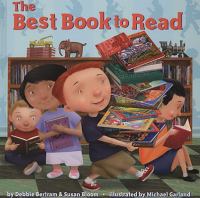
The Best Book to Read
by Debbie Bertram & Susan Bloom and illustrated by Michael Garland

Today is the class trip to the library, and the librarian tells the children that she will help them find the book that is “best” for them to read. She shows the children a space book, a book with knights and dragons, a bug book, a book about how to bake a cake, a dinosaur book, a book on how to train pets, and a magic trick book. Then the children pick out the “best book” and get their own library card. Then on the bus ride back to school, everyone enjoys reading the books they checked out.


Bats at the Library
by Brian Lies

One night the bats see that a librarian has left one of the library windows open a crack. The bats love to visit the library, and they cannot wait until they have the opportunity to do so. The bats look at many different kinds of book, and some bats like to “hang” around and talk about the books they have read. The little bats also learn the kinds of games they can play at the library, including making shadow shapes and copying themselves on the copier. The bats even have a storytime while they rest. Then the bats imagine themselves inside the story. They are so wrapped up in the story, the bats do not notice when the sun begins to lighten the sky. When they do notice, they know that it is time to leave, but they hope that a librarian will be kind enough to leave the window cracked on a night that is soon.


The Boys who was Raised by Librarians
by Carla Morris and illustrated by Brad Sneed

Melvin spends a lot of time at the Livingston Public Library, where he can learn about anything that he is curious about. He also gets to see his favorite people behind the reference desk. The librarians always talked to Melvin, and they were interested in anything that he was. They would help him find whatever information he needed in a book or on the Internet. One day, Melvin accidentally lets eighty-seven insects loose in the library, but Marge, Betty, and Leeola help him find, identify, classify, and catalog all of the bugs very quickly. As the years go by, the librarians help Melvin prepare for his part in the school play, help him with his baseball card collection, help him with the spelling bee (which he wins), and with a science fair. Melvin also comes to all the library programs. In high school, Melvin even gets a part-time job at the library. While he is at college, Melvin stays in touch with his favorite people at the library, and then he becomes the new librarian after he is done with school. He will soon help other children the way his favorite people helped him.


Library Lil
by Suzanne Williams and illustrated by Steven Kellogg

Lil has always had a book in her hand, even when she was just one year old. She even carried a book on the field with her when she played soccer. Lil had read all of the books in the children’s section by the time she was eight years old. She was also very strong, and could lift a whole set of encyclopedias in one arm, while reading one with her right. She would turn the pages with her teeth (but please do not try this at home). When she grew up, Lil became a librarian. Unfortunately, everyone in that town liked to watch television. Then one night a powerful storm blew in and knocked out the electricity. Lil pushed the bookmobile all over town and made sure everyone had something to read by candlelight. The electricity stayed off for two weeks, and by that time, everyone had gotten used to reading instead of watching television. Lil storytimes were also very popular. Then one night a motorcycle gang came to town. The leader was Bust-‘em-up Bill, and he got very upset when he found out he could not watch his favorite show. He decides to block the parking spot for the bookmobile with his motorcycle gang’s motorcycles. When Lil shows up, she tells them they need to move the motorcycles, or she will. Bill tells her they will all read if she can move the motorcycles. Lil throws them all into a big pile and parks the bookmobile. Then the guys go into the library and start reading. Soon they have to expand the library, and Lil gets some help from Bill, who is now called “Bookworm Bill.” He is also a great storyteller, and there are never any overdue books since he started working there.

Monday, April 5, 2010

April is National Humor Month

April is National Humor Month
Check out some of these joke books and keep your friends and family laughing


The Big Golden Book of Laughs: A Treasury of Poems, Jokes, Riddles and Rhymes
selected by Linda Williams Aber and illustrated by Jerry Smath


You Must Be Joking!: Lots of Cool Jokes
compiled and illustrated by Paul Brewer


The Silliest Joke Book Ever
by Victoria Hartman and pictures by R.W. Alley


1,000 Jokes for Kids of All Ages
by Michael Kilgariff


Keep 'em Laughing: Jokes to Amuse and Annoy Your Friends
by Louis Phillips and illustrated by Michael Chesworth


Silly Knock-Knocks
by Joseph Rosenbloom and illustrated by Steve Harpster


Ha! Ha! Ha!: 1,000+ Jokes, Riddles, Fact, and More
by Lyn Thomas and illustrated by Dianne Eastman


Jokelopedia: The Biggest, Best, Silliest, Dumbest, Joke Book Ever!
by Ilana Weitzman, Eva Blank, Roseanne Green and illustrated by Mike Wright